
Connecting Science and Communities: Reflections from the Alzheimer Europe Conference 2025
From 6 – 8 October 2025, the Alzheimer Europe Conference took place in Bologna and the theme was “Connecting Science and Communities: The Future of Dementia Care.” The event brought together researchers, clinicians, policymakers and people with lived experience of dementia from across Europe to share insights and shape the future of dementia research and practice.
This year the Conference included representatives from the Scottish Dementia Research Consortium (SDRC), Alzheimer Scotland, Brain Health Scotland, the Scottish Dementia Working Group (SDWG), and the National Dementia Carers Action Network (NDCAN). Together, we showcased the breadth and depth of dementia care, prevention, and treatment activity underway in Scotland which is underpinned, as always, by the voices of lived experience.
The Scottish presence was extensive, with multiple oral and poster presentations spanning topics from self-management and treatment access to women’s brain health and the role of lived experience in research.
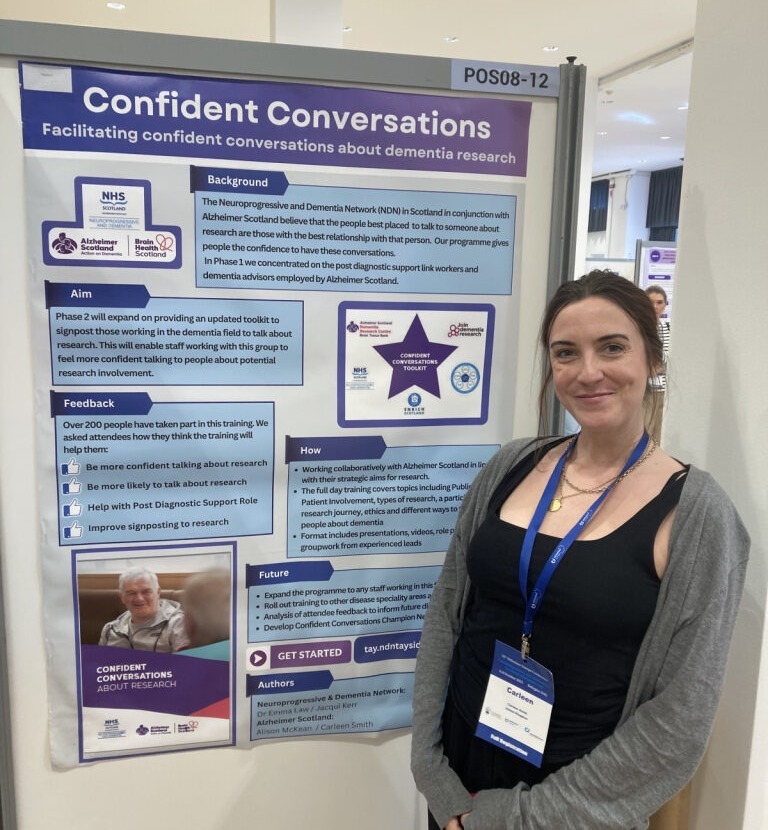
Carleen Smith, SDRC Officer, with the Confident Conversations Poster
While it was impossible to attend every session, several highlights stood out, particularly those featuring members of Alzheimer Scotland’s Active Voice network.
A Self-Management Resource: “Top Tips” for Living Well with Dementia
Members of the Scottish Dementia Working Group, Margaret McCallion and Stuart Dougall, presented the updated version of Our “Top Tips” for Living Well with Dementia. This is a peer-to-peer resource offering practical strategies developed by people living with dementia themselves. The booklet’s message is simple but powerful: while there is no one-size-fits-all approach, sharing what works can help others find their own ways to live well.
The SDWG has also led an innovative dissemination strategy for this resource, including a short film, social media engagement, community distribution, and conference presentations. It is already being embedded within post-diagnostic rehabilitation programmes delivered by occupational therapists and incorporated into allied health professional education.
Hope, Choice, Fairness: Ensuring Equitable Access to New Dementia Treatments
This session was was delivered by Vicki Cahill (Alzheimer Scotland), Stuart Dougall (SDWG), and Bill Alexander (NDCAN).
As new treatments for dementia emerge, questions of equitable access are increasingly urgent. This session explored how Alzheimer Scotland’s approach ensures that the perspectives of people with dementia and their carers shape decision-making around access to new drugs and therapies.
The team emphasised three key principles of hope, choice and fairness. By embedding lived experience at the heart of Scotland’s policy and practice, this approach ensures that care and treatment decisions are guided by people’s rights, will, and preferences. The presentation offered a practical demonstration of how lived experience can drive meaningful, systemic change.
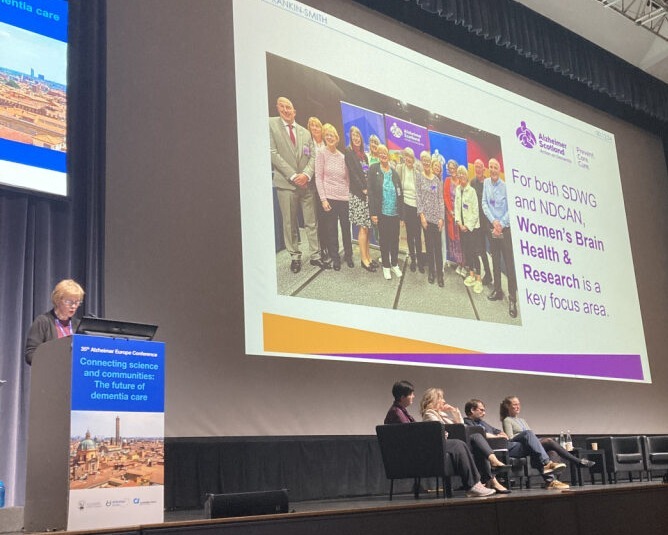
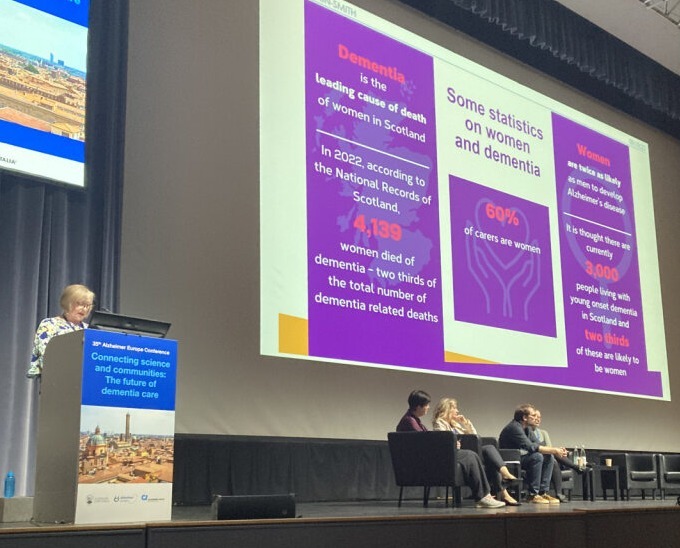
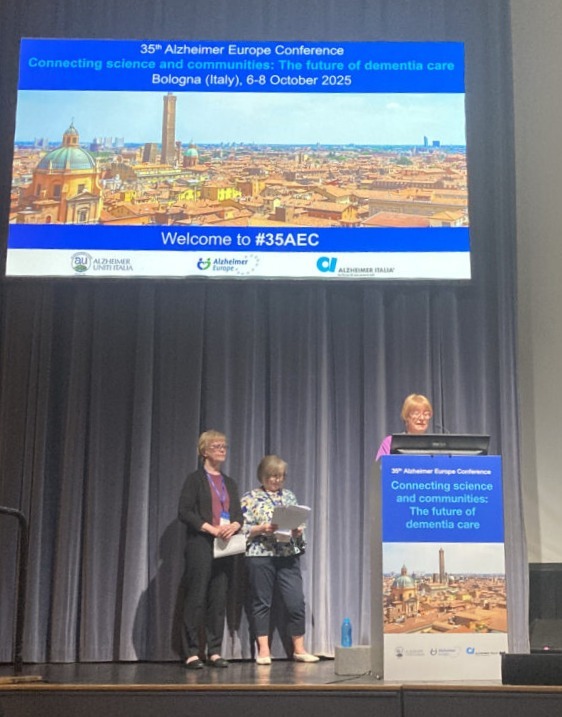
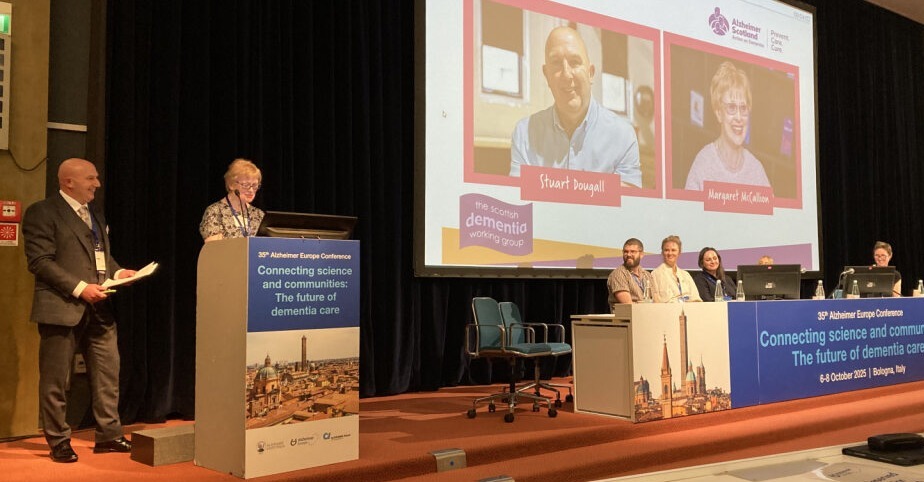
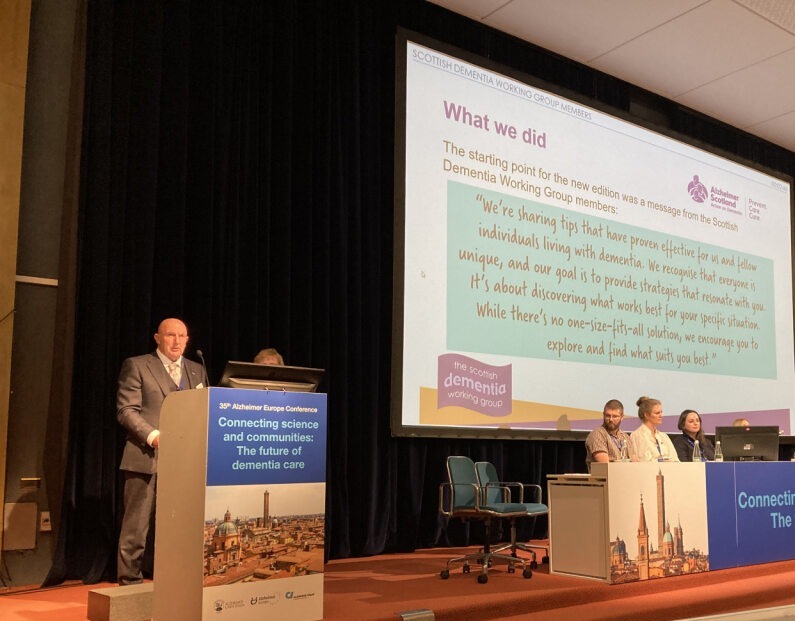
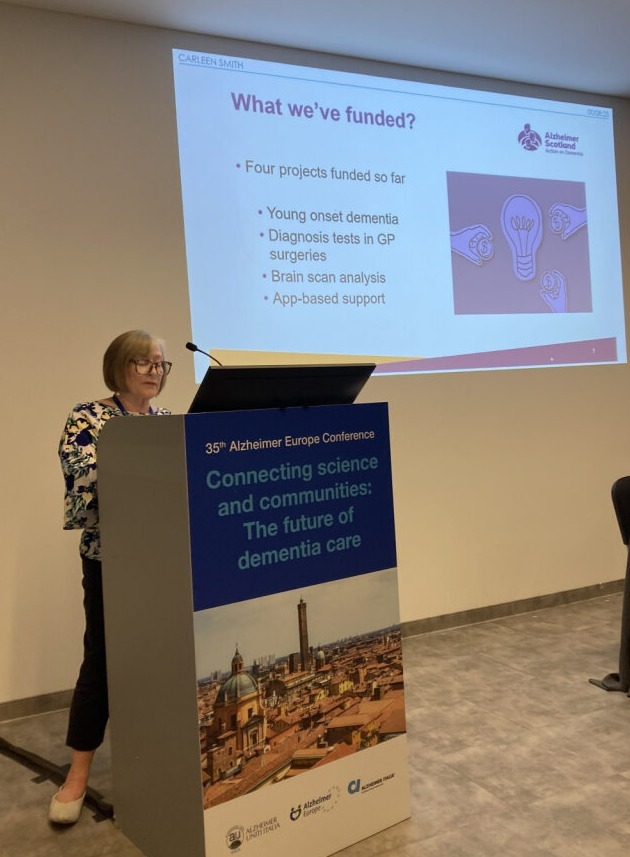
Some pictures from Alzheimer Scotland/ Active Voice speakers
Women’s Brain Health: A Campaign for Change
Margaret McCallion (SDWG), Marion Ritchie, and Joanna Boddy (NDCAN) delivered a powerful session highlighting the urgent need to address gender disparities in dementia research and care.
Women make up two-thirds of people living with dementia in Scotland and 60% of those who provide unpaid care. Despite this, their specific needs have often been overlooked. The SDWG and NDCAN have therefore launched a “campaign for change” to ensure women’s brain health becomes a recognised priority in both research and public health policy.
Their work includes promoting awareness of risk factors, advocating for early diagnosis, and calling for the inclusion of dementia within wider women’s health strategies.
This inspiring session underscored the leadership of lived experience groups in driving forward gender-inclusive dementia policy and research in Scotland.
Lived Experience Leading the Way in Research Funding
The final Scottish presentation came from Carleen Smith (SDRC) and Joanna Boddy (NDCAN), who shared insights from the Alzheimer Scotland Student Research Programme. This Programme funds Masters-level studentships across Scotland and stands out for placing people with lived experience of dementia at the heart of the funding process.
Thank you Alzheimer Europe!
The Alzheimer Europe Conference 2025 was an inspiring reminder of what can be achieved when science and communities truly connect. The Scottish delegation’s contributions had true depth and breadth which reflected a national commitment to collaborative, person-centred progress in dementia prevention, care and treatment.
We extend our thanks to Alzheimer Europe for hosting such an engaging and forward-looking event and to all our Scottish colleagues and lived experience partners who made our presence so impactful. Together, we continue to show that Scotland is leading the way in ensuring that dementia research and care are informed by the voices of those who matter most.